

Stories of St. Andrews
Draft Outline as of Jan 2026
Bob Taylor
Potential Story Paths
(An evolving, non-exhaustive list)
The stories below represent possible directions, not a fixed plan or a promise of coverage. Some will be told, others may not, and new stories will surface as conversations unfold and connections are made.
Historical Stories - The path to today’s St Andrews
Chapter 1 - St. Andrews Today: A Living Waterfront - Published
Summary: This chapter sets the tone for modern St. Andrews—an independent waterfront district that knows exactly what it is (and what it refuses to become). It frames today’s vibe as a continuation of the past: salty, resilient, and real, but also creative and forward-looking. It’s essentially the “here’s why this place matters right now” opener.
Chapter 2 - Under Changing Flags - Published
How Empires, Borders, and Ambition Shaped the Path of St. Andrews
Summary: This chapter explains why St. Andrews was never developing in a vacuum—because coastal Florida was a strategic chessboard for competing powers. It focuses on how shifting control, borders, and geopolitical priorities influenced what happened (and didn’t happen) around the bay. The point is clear: even when St. Andrews looked isolated, big-world forces were steering the riverboat.
Chapter 3 - The Arrival of John Clark: A Permanent City is Born - Draft
Summary: This chapter centers on John Clark and the shift from “seasonal camps” and scattered activity into something permanent and recognizable as a town. It explains what made Clark successful, why his arrival mattered, and how his presence anchored St. Andrews during an era when most places like it faded out. The theme is roots—literal settlement roots—not just legend.
Chapter 4 - The Original Meaning of “Salty” in St. Andrews - The History of Salt Making in St Andrews - Draft
Summary: This chapter goes straight into the Civil War-era salt story—salt as survival, industry, and a strategic resource. It shows how the bay, the sun, and the shoreline created economic opportunity, and how wartime pressures shaped local life. “Salty” here isn’t a slogan—it’s work, grit, and necessity.
Chapter 5 - Where the Town Met the Tide: The Story of Ware’s Wharf - Draft
Summary: This chapter tells how Ware’s Wharf became a beating heart of commerce when St. Andrews needed a real economic anchor. It focuses on the Ware brothers’ role, the wharf’s importance, and how waterfront business shaped the town’s identity and trajectory. In plain terms: this is where St. Andrews functioned like a real port town, not just a pretty shoreline.
Chapter 6 - When Cincinnati Discovered St. Andrews - Draft
Summary: This chapter covers the Cincinnati promotion/land scheme era—how St. Andrews was marketed hard to Midwestern buyers and why it worked. It explains the dream being sold (Florida land, sunshine, opportunity) and the practical reasons it didn’t fully deliver (rail access and infrastructure gaps). The lasting takeaway is important: even failed schemes can leave a real footprint on long-term development.
Chapter 7 - The Man Who Connected the Bay: George M. West - Draft
Summary: This chapter focuses on George M. West—his background, his influence, and why he’s inseparable from the Panama City/St. Andrews story. It frames him as a connector: promotion, development, and the energy that helped shift the area’s direction. It also ties his era to the broader forces shaping Florida’s growth.
Chapter 8 - The Ditch That Moved a Nation: The Panama Canal - Draft
Summary: This chapter zooms out to the Panama Canal as a national turning point—trade, military strategy, and America’s growing global reach. Then it zooms back in to show how the canal’s prospect (and later reality) fueled Florida speculation and regional ambition, including impacts that touched St. Andrews and the bay economy. In short: a world-scale project created local-scale ripples.
Chapter 9 - The SS Tarpon: Gulf Coast Steamer and Community Lifeline - Draft
Summary: This chapter tells the story of the SS Tarpon as a literal lifeline along the Gulf Coast when roads and rails were limited. It covers the ship’s origins, capabilities, and the critical role it played moving freight, mail, and people into and out of St. Andrews Bay. The human center of gravity is Captain Barrow and the ship’s reputation for dependable, stubborn regularity.
Chapter 10 - A.B. Steele: When the Railroad Came to the Bay - Draft
Summary: This chapter centers on A.B. Steele and the era when railroads reshaped Florida’s future—and why the arrival of rail into the bay region mattered so much. It explains Steele’s role, what the railroad unlocked for Panama City, and why St. Andrews’ attempt to secure the same advantage fell short. The theme is blunt: rail access decides who booms and who gets bypassed.
Chapter 11 - Rails and Tides: The Railroad and the Making of Historic St. Andrews - Draft
Summary: This chapter shows how rail development influenced the character and economic balance between St. Andrews and its growing neighbor. It emphasizes that St. Andrews developed differently—less like a rail-driven boomtown and more like a shoreline community shaped by water access and stubborn continuity. The railroad mattered, but it didn’t overwrite the town’s tide-driven identity.
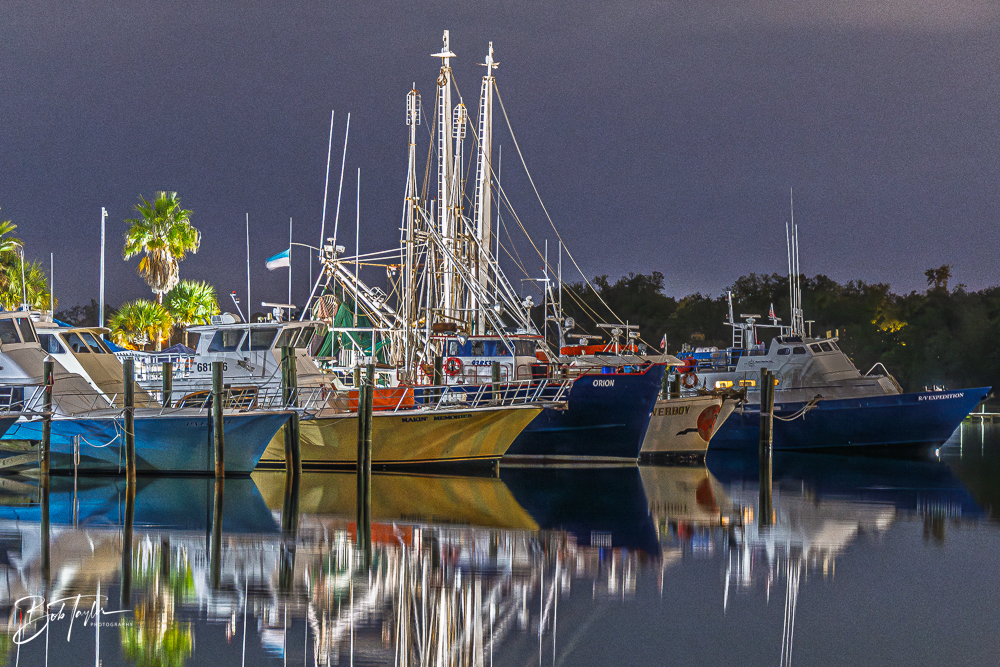
Chapter 12 - St. Andrews Marina: Where the Town Meets the Water - Draft
Summary: This chapter focuses on the marina as both a physical place and a community hinge-point—where working waterfront meets daily life. It walks through how the marina role evolved over time and why it remains central to St. Andrews identity. The marina isn’t “scenery” in this telling—it’s a living nerve center.
Chapter 13 - War on the Water: How Conflict Shaped St. Andrews, Florida - Draft
Summary: This chapter traces how military conflict—centuries of it, in different forms—reached into the St. Andrews Bay story because geography makes sheltered deep water strategically valuable. It shows how global and national conflicts affected local priorities, development paths, and the bay’s role. The message: water like this never stays neutral for long.
Chapter 14 When the Bay Was the Port - Draft
Summary: This chapter explains “port” activity before the modern Port of Panama City had fences, terminals, or formal boundaries. It paints the bay itself as the working port—dock-by-dock commerce moving goods, people, lumber, and supplies by tide and muscle. Then it starts setting up the later shift toward more centralized, industrial port operations.
Chapter 14 - When the Bay Met the Pines - Draft
Summary: This chapter shifts inland to the forests—pines, timber, and the industries that depended on them (lumber, naval stores, paper). It explains how the bay moved products, but the pine economy generated them—and how land ownership and corporate strategy evolved over time. The long arc ends with land itself becoming the next “resource” through development.
Chapter 16 - Hathaway Bridge: Gateway to the Beaches - Draft
Summary: This chapter frames Hathaway Bridge as more than a structure—it’s a turning point that changed access, movement, and regional gravity. It explains how connectivity helped drive beach development and reshaped what the coastline meant economically and culturally. The bridge is treated like a lever that moved the whole region’s future.
Chapter 17 -Why St. Andrews? - Draft
Summary: This chapter is the reflective “why this place” piece—personal, cultural, and rooted in the bay’s pull. It explains why St. Andrews became home in a deeper sense, not just a location on a map. It’s the chapter that turns history into meaning.
Chapter 18 - From Wharf to Walkable: St. Andrews - The Businesses That Built St. Andrews - Draft
Summary: This chapter focuses on the locally owned business backbone—how commerce shaped community character across eras. It connects the old wharf-and-working-waterfront economy to the modern walkable district defined by independent operators. The underlying argument is traditional and sharp: local ownership is what keeps a place from turning generic.
Chapter 19 Anchored in the Bay: The Story of St. Andrews Marina - Draft
Summary: This chapter returns to the marina with a more story-driven, grounded view of how it functioned—and still functions—as community infrastructure. It emphasizes the marina as continuity: boats, labor, supplies, seafood, daily rhythms, and identity tied to the water. The marina is presented as one of the clearest through-lines between “then” and “now.”
Business Stories — Told Through the People Who Run Them
Individual business stories focused on the owners, their path to St. Andrews, and what it takes to still be here.
Roots & Continuity
Stories about longevity, transition, and carrying something forward.
Hunt’s Oyster Bar & Seafood Restaurant
Uncle Ernie’s Bayfront Grill & Brew House
Captain’s Table Fish House
Charlie Coram’s Place
Dan’s Pawn
Native Spirit Museum & Gallery
St. Andrews Marina Ship Store
Places People Gather
Stories about social gravity — where St. Andrews meets itself.
The Dive - In Progress
Newby’s BrewHouse on the Bay - Draft
The Grocery Kitchen & Taproom - Draft
St. Andy’s Sports Pub
Copper Tap Grille
Burgunbarrel
Little Village -In Progress
The Sound Collective
Food, Drink & Everyday Rituals
The places woven into daily and weekly routines.
Brine on the Bay BBQ
Thai Basil
FINNS Island Style Grub
Luna Muna CafeBar
Amavida Coffee Roasters
Drew’s Ice Cream
St. Andrews Slice House
M’s Thai Sports Bar & Grill
Makers & Independent Retail
People who chose independence, risk, and community over chains.
Sunjammers - Draft
Gypsy Willow - In Progress
Eva & Quinn Boutique
The Trendy Side
Baytowne Bridal - In Progress
Folklore
Community Services
Quiet, steady businesses built on trust and long relationships.
Holloway Insurance
Blackwell Insurance
The Wild Hare’s Barber Shop
Community & Place Stories
Broader stories that give context to St. Andrews.
Local Art & History
Panama City Publishing Company Museum
Floriopolis
Art Scene Murals
Janie’s Fence
Waterfront & Working Bay
Stories centered on the people and operations that keep the working waterfront alive.
The Raffield Family & Family Tradition Charters
Southern Dawn Charters: Running a Serious Operation
Gulf Coast Excursions: Making the Bay Accessible
Pathfinder Charters - Draft
The Story of the Governor Stone - Draft