Lambert Ware and The Wharf that Saved St. Andrews
There was a moment in St. Andrews’ history when the bay went quiet enough that it almost disappeared.
After the Civil War, this place—once loud with furnaces, wagons, and the hiss of boiling brine—fell into silence. The salt works that had lit the night sky during the war were smashed and burned. Old Town was gone. Hurricane Island, briefly alive with refugees and blockaders, emptied out and slipped back into memory. Government officials dismissed the bay as “desert country.” No troops were stationed. No rebuilding plans were drawn.
What remained was fragile and temporary: a few fishermen salting their catch, a handful of men living off tides and habit, not hope. St. Andrews existed—but only barely.
It had water.
It had fish.
It had history.
What it didn’t have was infrastructure.
And without that, a town cannot come back.
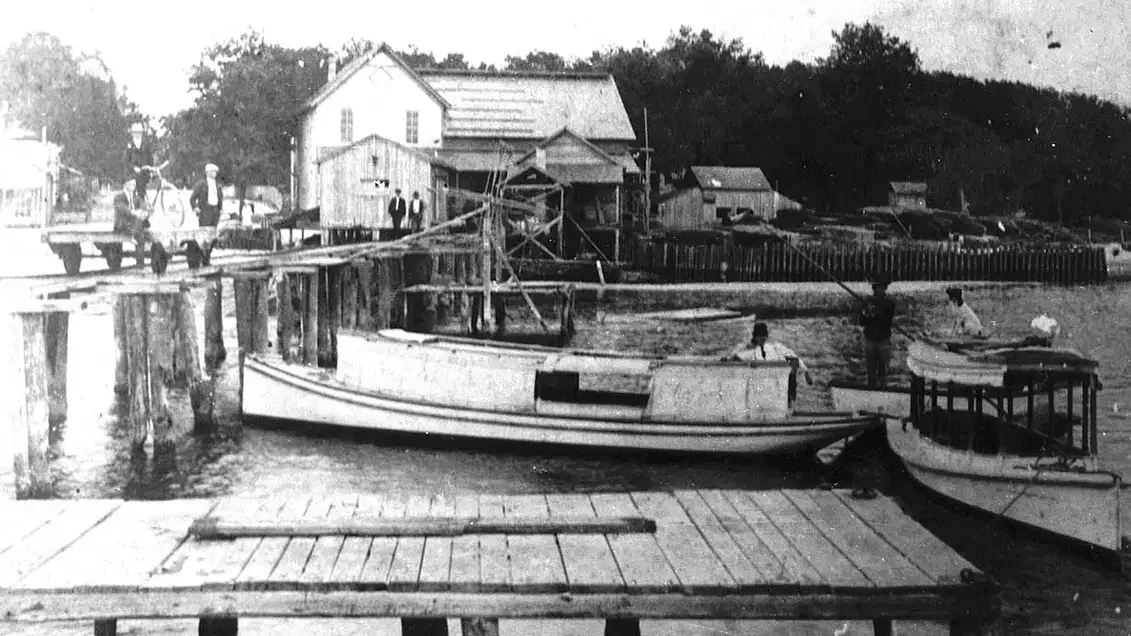
A Man Prepared for a Waterfront That Didn’t Exist Yet
When Lambert Milbank Ware, Sr. first saw St. Andrews Bay in the late 1870s, he was unusually well prepared to understand what he was looking at.
Ware did not arrive as a dreamer chasing scenery. He came from a long line of maritime families rooted in the Mid-Atlantic world of boats, trade, and coastal commerce. He had been shaped by the working waters of Maryland—places where shallow draft mattered, schedules mattered, and survival depended on understanding both sea and supply chain.
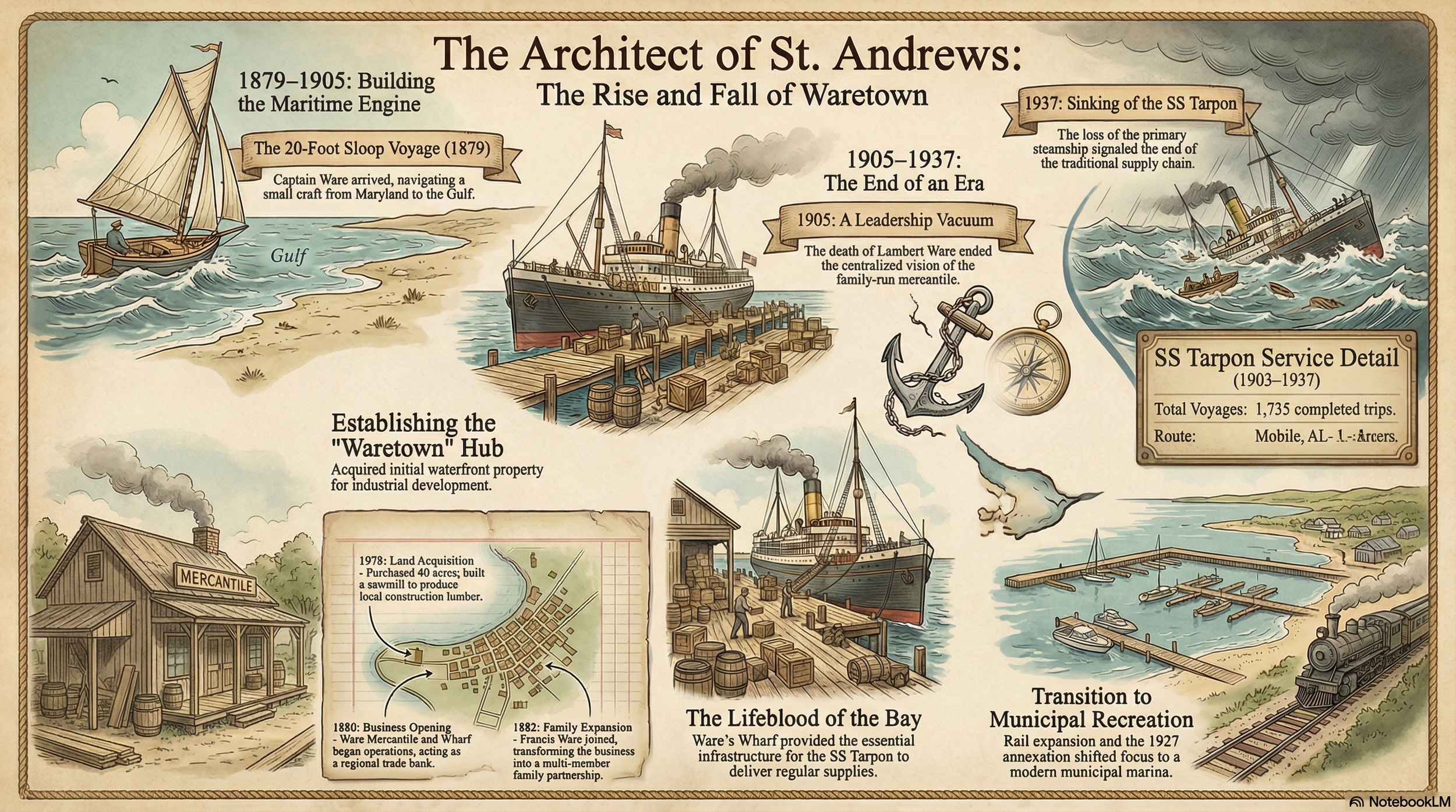
He had already proven his seamanship by navigating a 20-foot sloop from Maryland to Florida—no small feat, and not something undertaken lightly. He had worked coastal survey routes. He understood harbors not as views, but as systems.
So when Ware looked at St. Andrews Bay, he did not see ruins.
He saw a vacuum.
No dock.
No supply point.
No commercial gravity pulling people back to the shoreline.
In 1879, he committed himself to changing that.
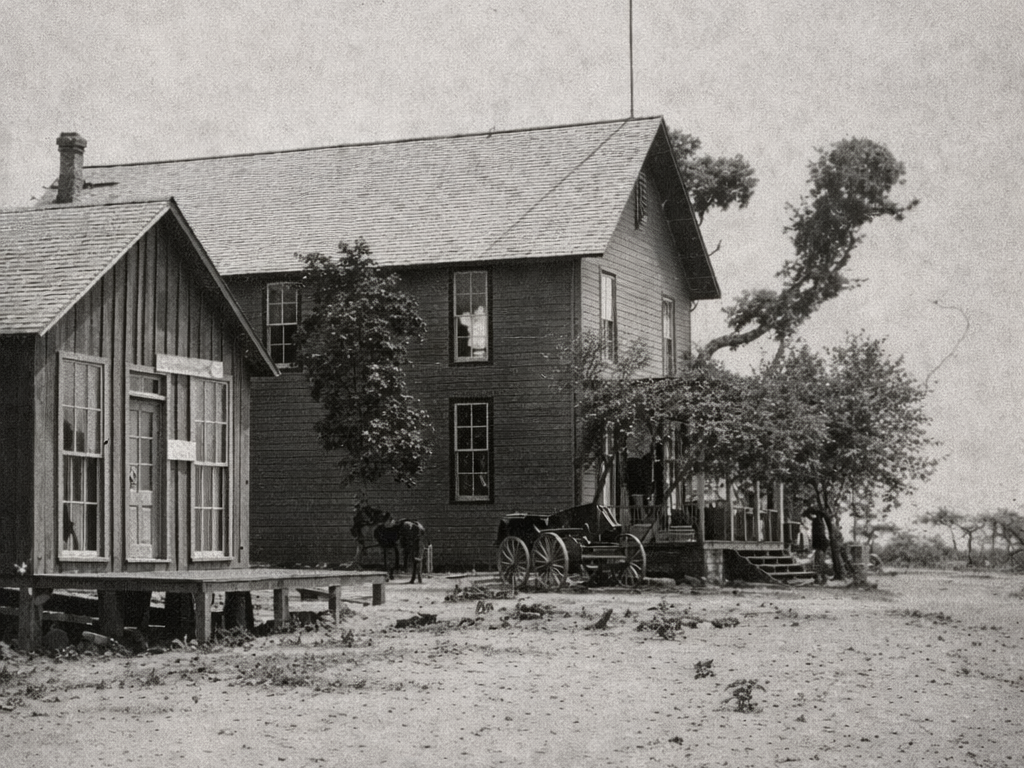
Ware’s Point and the First Real Rebuild
Ware did not start with a town. He started with land and lumber.
He purchased forty acres at Buena Vista Point—property that had passed through neglect and tax sale after the war. He built a sawmill first, because nothing else could exist without materials. From that lumber came his home, then a mercantile building, and finally the structure that would change everything:
Ware’s Wharf.
By 1880, Ware had settled permanently. By 1882, his brother Francis Ware joined him, turning a one-man operation into a family enterprise. Together, they laid out what locals came to call Waretown—not a nickname, but a functional reality.
This was not Old Town reborn.
It was something different.
Old Town had grown organically, loosely, and seasonally.
Waretown was deliberate.
Platted land.
A working dock.
A mercantile designed to receive, distribute, and extend credit.
Ware wasn’t rebuilding what had been destroyed.
He was building what had never fully existed.
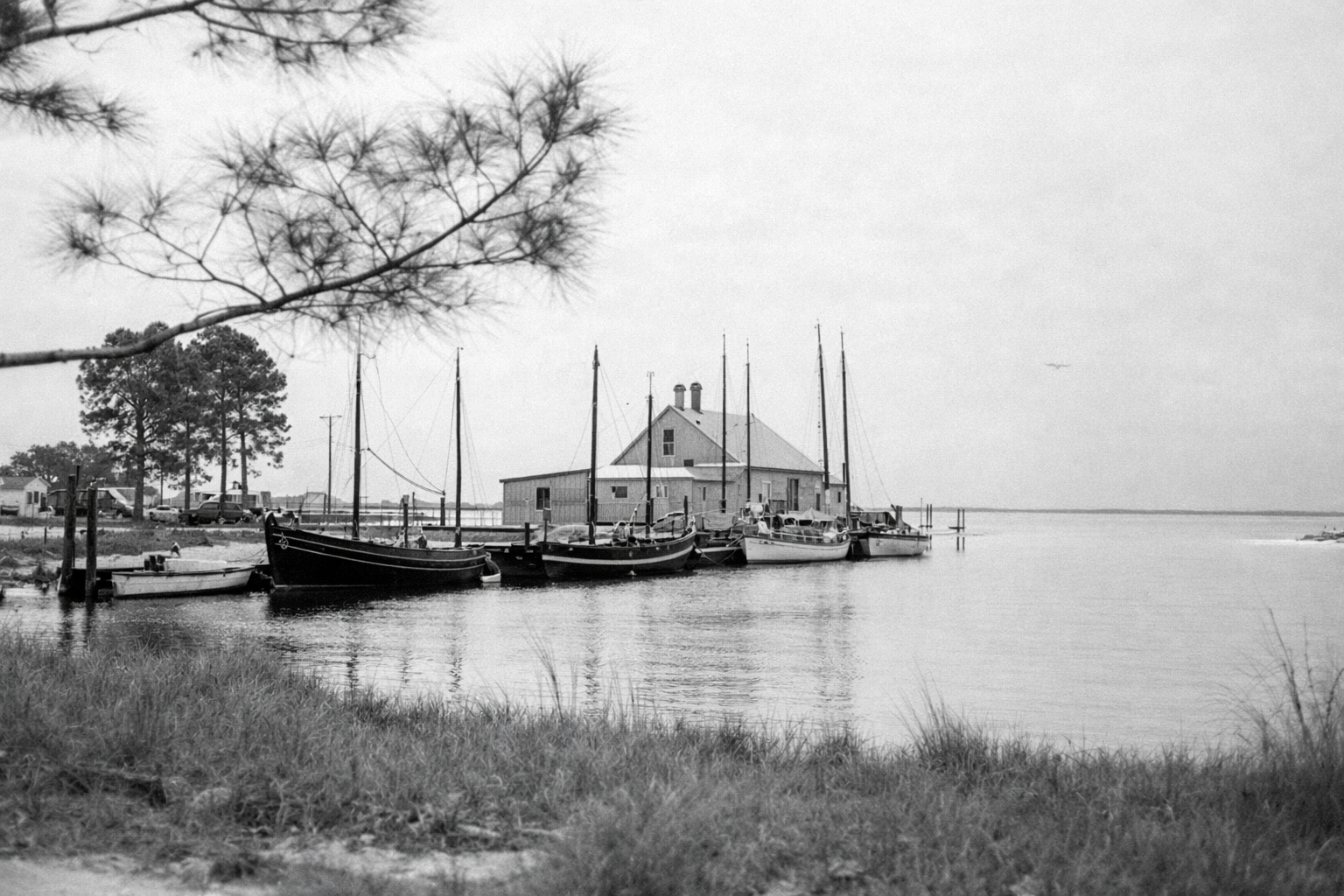
Ware’s Wharf: More Than a Dock
Ware’s Wharf became the single most important structure in post-war St. Andrews.
It was not just where boats tied up. It was where the town reassembled itself.
Goods arrived there—flour, hardware, beer, tools.
Fish left there—salted, packed, shipped onward.
Farmers, fishermen, builders, and visitors all passed through the same narrow strip of planks.
Ware’s Mercantile, attached to the wharf, functioned as more than a store. In frontier Florida, a mercantile was a bank, a supply depot, and a social center rolled into one. Credit extended. News exchanged. Schedules learned.
If you wanted to know what was happening in St. Andrews, you went to Ware’s.
And slowly, something critical returned:
Confidence.
Confidence that goods would arrive.
Confidence that work could be sustained.
Confidence that settling here made sense.
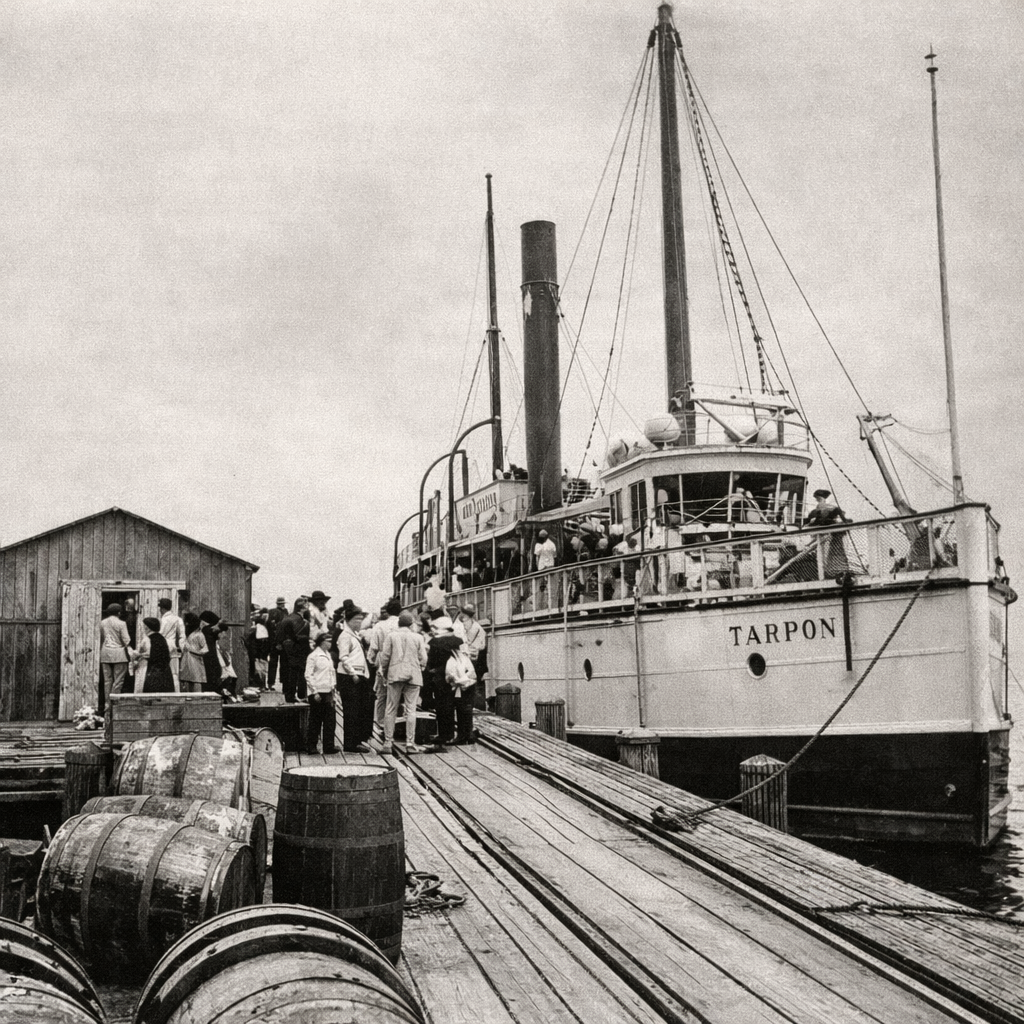
When the Bay Ran on a Clock
That confidence reached its peak with the arrival of regular coastal steamship service—especially the SS Tarpon.
For more than three decades, the Tarpon ran a dependable route along the Gulf, stopping at Ware’s Wharf with remarkable regularity. Locals said you could set your watch by her whistle—and in a town shaped by tides and weather, that reliability was transformative.
The Tarpon didn’t just deliver cargo.
She delivered connection.
Beer, flour, building materials, passengers—all flowed through Ware’s Wharf. St. Andrews was no longer isolated. It was scheduled. Known. Expected.
Ware’s Wharf worked because Ware understood logistics.
The Tarpon worked because the wharf existed.
Together, they turned St. Andrews into a functioning port again.
Why Ware’s Wharf Eventually Faded
Ware’s Wharf did not disappear because it failed.
It disappeared because the world changed.
The first shift came in 1905, with the death of Lambert Ware. He had been the central force—commercial, civic, and logistical. While the family continued on, the tightly integrated model he built began to loosen.
Next came incorporation and annexation. St. Andrews became a town, then was absorbed into Panama City. The waterfront that had once been privately organized around Ware’s Wharf became part of a larger municipal system.
Then transportation changed.
Rail lines expanded.
Trucks replaced schooners.
Roads mattered more than docks.
And in 1937, the final symbolic blow landed when the SS Tarpon was lost in a hurricane offshore. With her went the last true link to the era when St. Andrews ran on maritime schedules.
By the mid-20th century, the general mercantile-and-wharf model no longer fit the economy. Ware’s Wharf had done its job.
What Stands There Now
Today, you won’t find a wooden dock stacked with freight or a mercantile extending credit for flour and nails.
What stands in its place is the St. Andrews Marina—a waterfront still doing what it has always done, but for a different purpose.
Boats still come and go.
People still gather.
The bay is still the center.
The function changed—from commerce to recreation—but the location did not. That alone tells you how right Ware was about where St. Andrews needed to anchor itself.
The Real Legacy of the Ware Brothers
The Ware brothers didn’t just reopen trade.
They restarted momentum.
They took a bay written off as “desert country” and gave it infrastructure, rhythm, and credibility. They replaced post-war silence with the sound of arrivals. They turned water into opportunity—not through speculation, but through work.
Ware’s Wharf eventually disappeared, but St. Andrews did not.
Because once a town learns how to function again, it doesn’t forget.
And if you stand by the marina at dusk, watching boats settle into their slips, you’re standing in the exact place where St. Andrews learned that lesson—when a dock, a mercantile, and two brothers gave the bay its purpose back.
Different century.
Different economy.
Same water.
Suggest more engaging titles
Here are stronger, more engaging title options, tuned to the Stories of St. Andrews voice—grounded, narrative-driven, and centered on impact, not just biography. I’ve grouped them by feel so you can quickly see what kind of story each one signals.