The Original Meaning of “Salty” in St. Andrews
The History of Salt Making in St Andrews
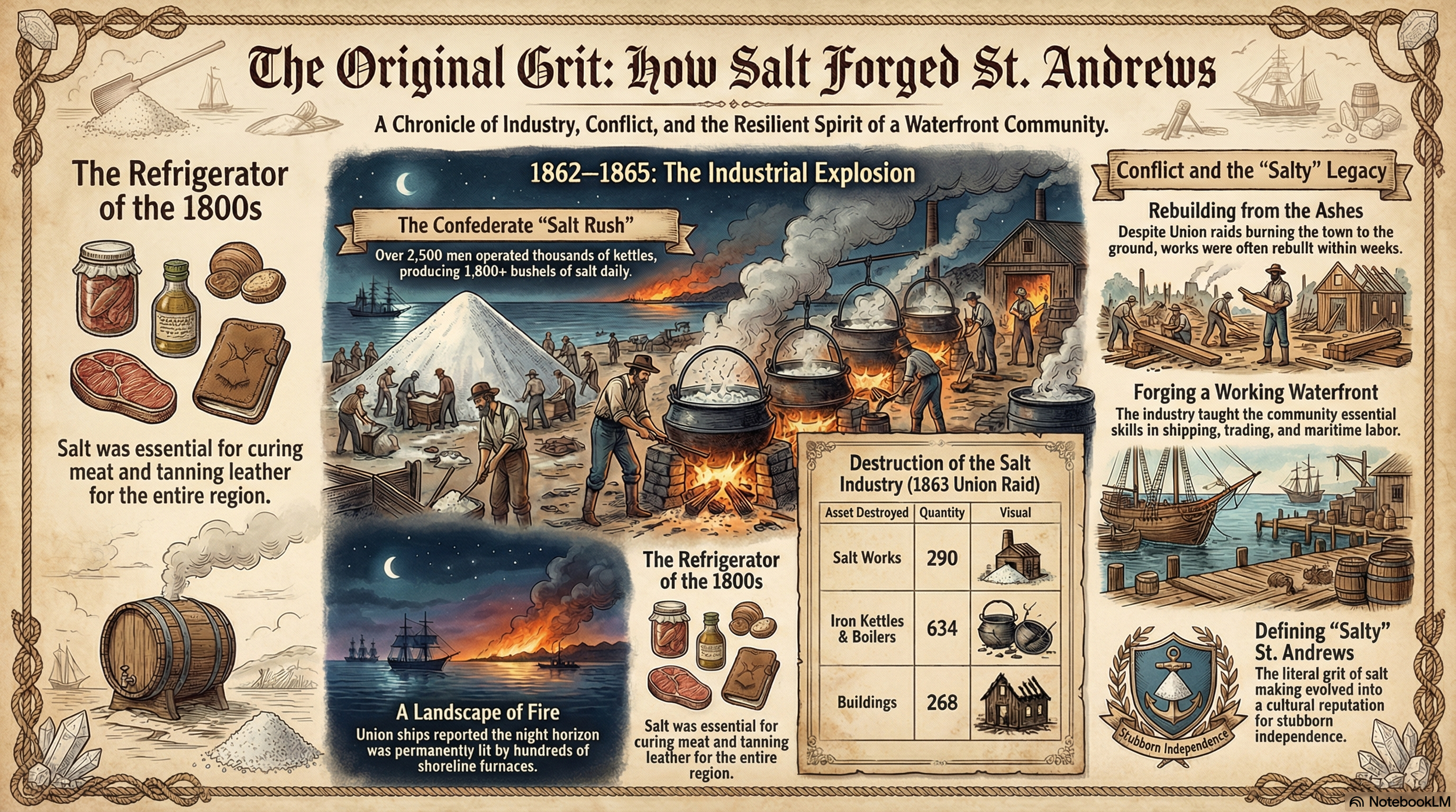
Before “salty” became a badge of honor—our shorthand for stubborn independence, bayfront grit, and a little “don’t tell me what to do”—it was something you could smell.
Picture St. Andrews in the mid-1800s: not a restaurant row, not a tourist district, not even much of a town by modern standards. Just a thin, hardworking settlement on the edge of St. Andrews Bay—sand, scrub, pine, and water in every direction. And then the smoke.
Not a wildfire. Not a chimney.
Salt smoke.
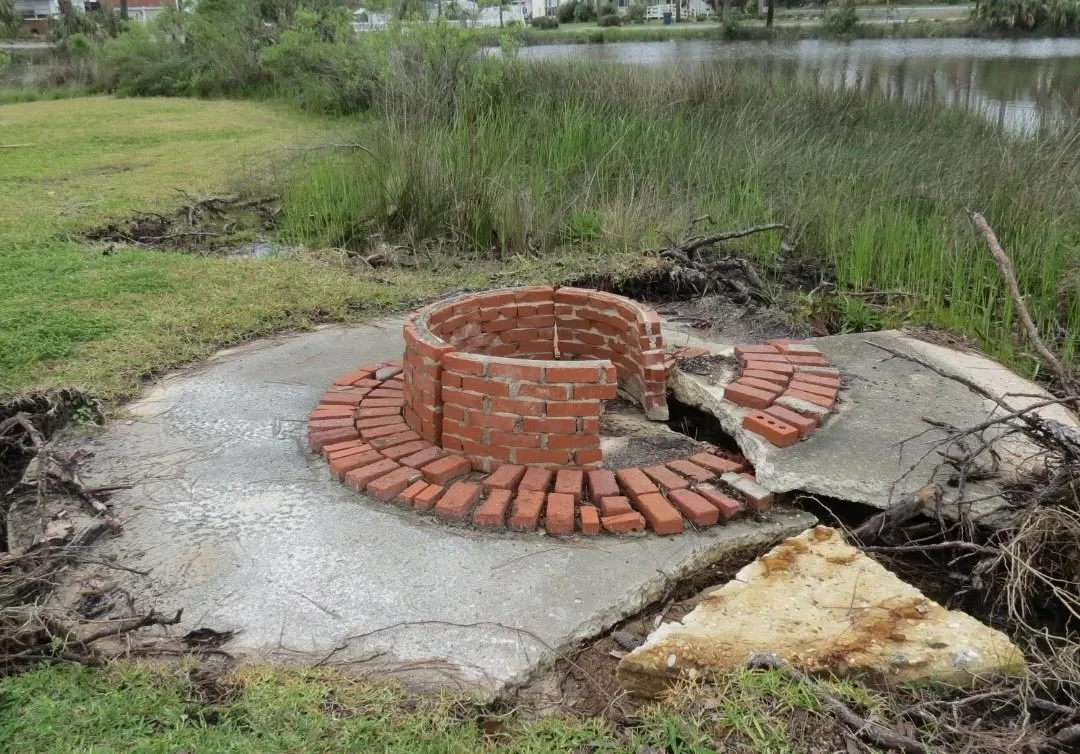
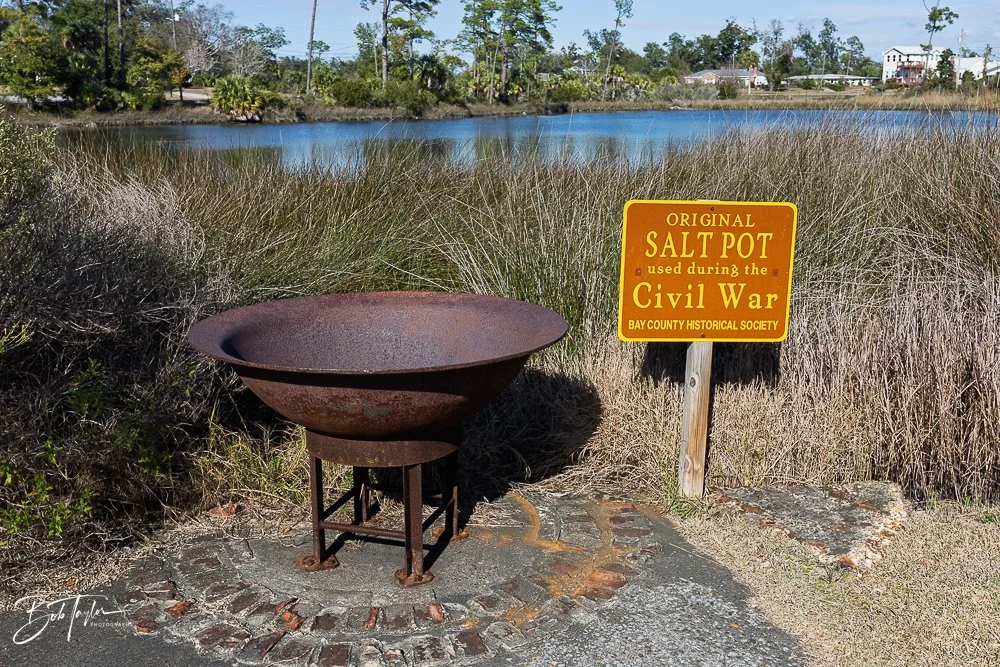
Low fires burning day and night, iron kettles boiling seawater until it turned into the one thing every household, every fisherman, every rancher, and every army needed to survive: salt.
That’s the first “salty” St. Andrews ever knew—earned the hard way, one kettle at a time.
Why Salt Started Here
Salt wasn’t a luxury. It was the refrigerator of the 1800s.
Long before ice plants and electric coolers, salt was how you kept food from rotting in the Florida heat. It preserved pork, beef, fish—anything that had to last through a season, a shipment, or a long trip inland. It was also essential for tanning hides into leather: harnesses, boots, tack, belts—the everyday tools of a working South.
St. Andrews had the perfect ingredients:
Endless seawater
Plenty of wood for fuel
A working bay with fishing, shipping, and shoreline camps
Saltmaking here existed before the Civil War, tied closely to fishing and the seasonal visitors who came to the bay. But when the war arrived, salt stopped being “useful” and became strategic.
When Salt Became a Wartime Industry
The Civil War turned St. Andrews Bay into something bigger than itself.
Blockades and broken supply lines made ordinary salt hard to get and wildly expensive. The Confederacy needed preserved food to feed troops and leather goods to outfit them. The Gulf Coast—especially places like St. Andrews Bay—became a salt factory for a desperate region.
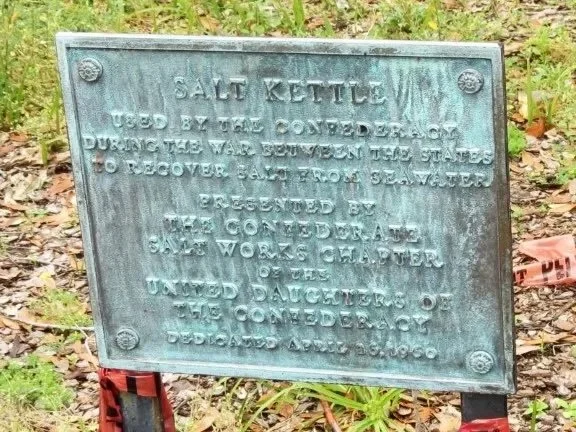
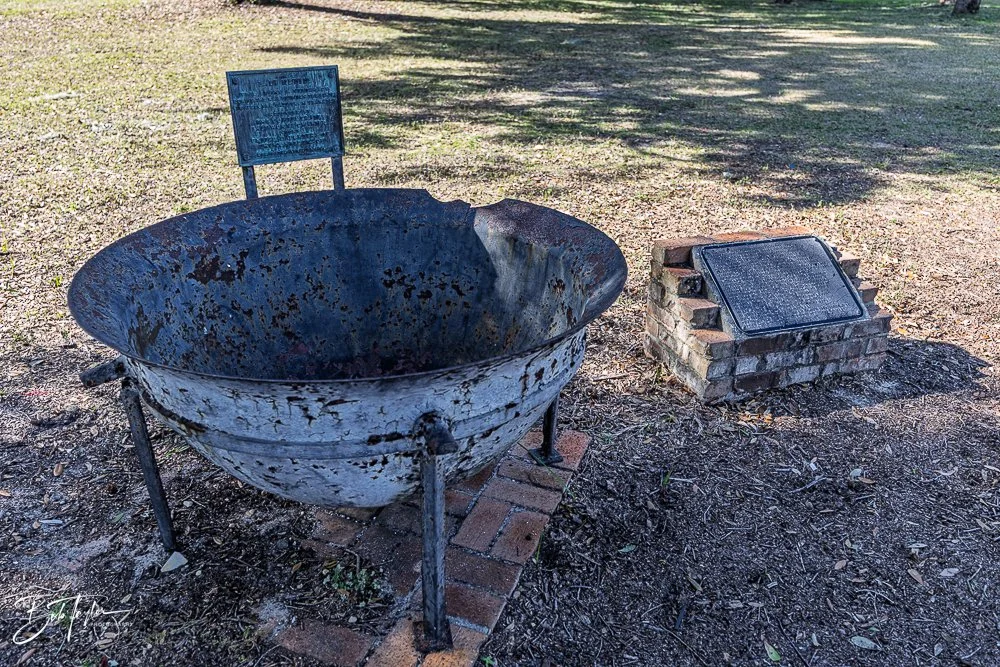
Salt camps popped up along the shoreline. Fires were built. Kettles were set. And the bay became a place of relentless, smoky work.
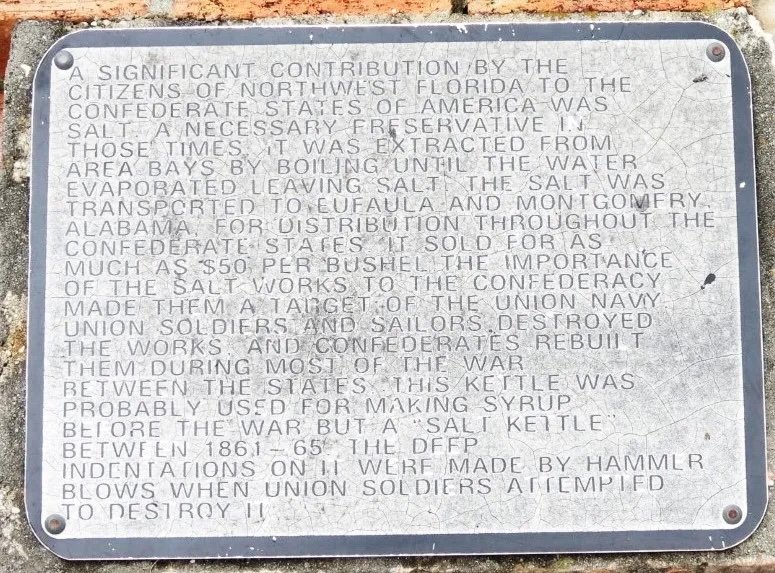
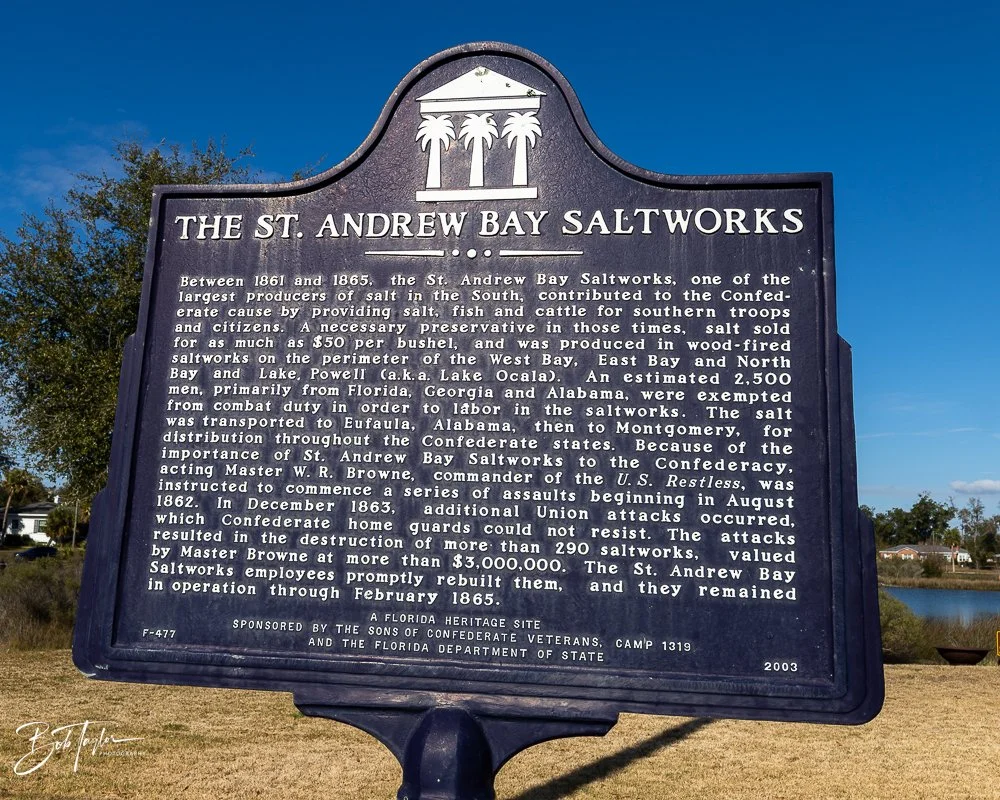
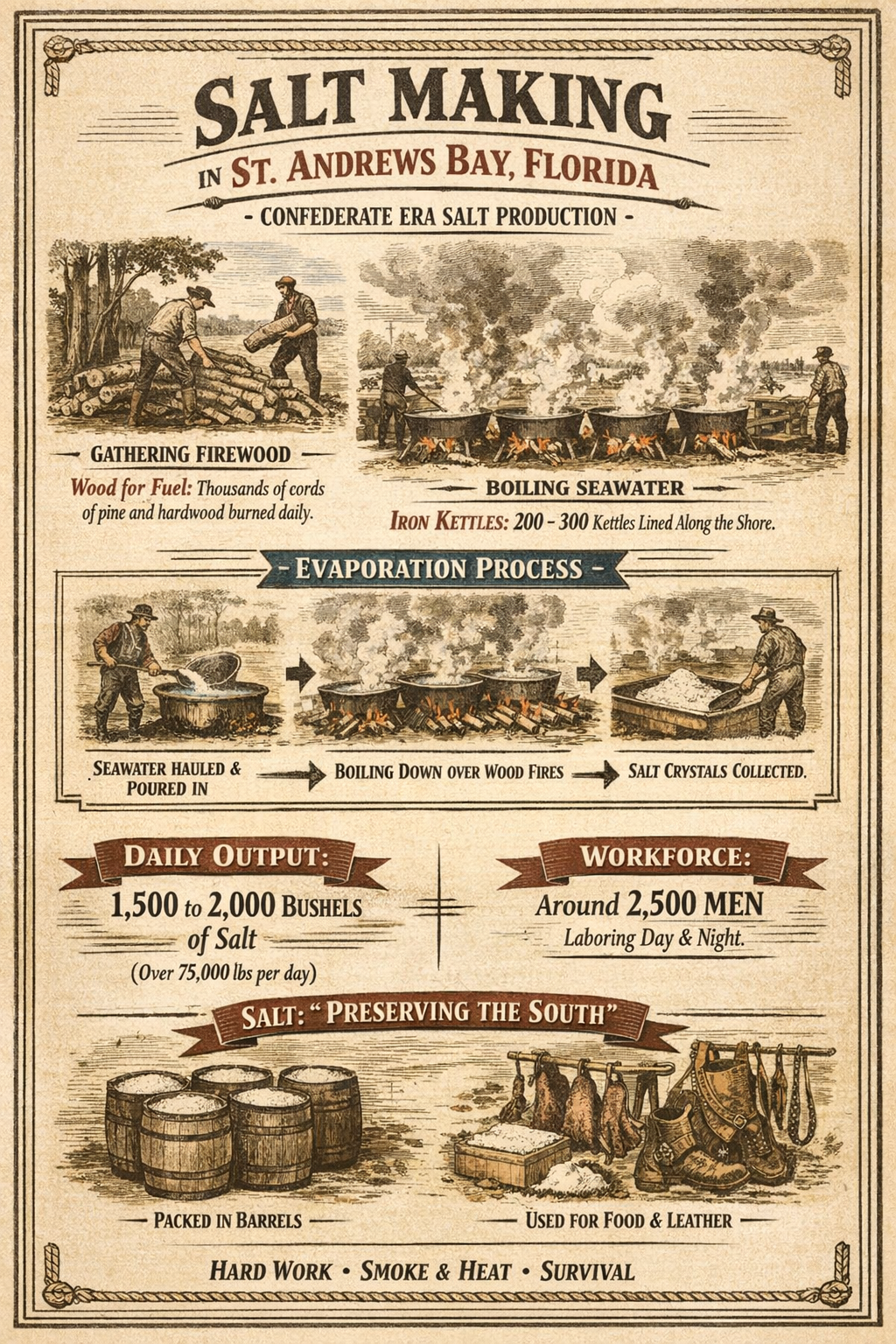
At peak production, accounts from the time describe thousands of workers involved statewide, and estimates place roughly 2,500 men working the St. Andrews Bay area operations during the war’s high demand. That’s not a side hustle—that’s an industry.
And it produced like one.
One often-cited estimate puts St. Andrews Bay output around 1,800 bushels of salt per day at prime wartime pace. (A bushel of salt is roughly 50 pounds—so you’re talking tens of thousands of pounds daily.) Statewide production later climbed even higher as demand intensified.
Salt prices soared during the war. When something becomes scarce, it becomes money. And salt—plain, gritty, unglamorous salt—became a serious economic engine.
For St. Andrews, those kettles didn’t just make salt. They made commerce.
But the war also brought fire in another form: Union forces raided the bay and St. Andrews itself was burned to the ground. The town’s slow arc of growth was knocked backward in an instant, and the community had to rebuild from ashes—another early lesson in resilience that would echo through every later era of “salty” St. Andrews.
When the Salt Fires Drew Enemy Fire
By late 1862, St. Andrews Bay had become impossible to ignore.
Union ships entering the bay at night reported a shoreline lit by hundreds of fires—salt kettles burning along the water’s edge, up bayous and creeks, and deep into the surrounding swamps. What looked like a scattered operation on paper was, in reality, a sprawling industrial landscape.
The first blows fell in September 1862, when sailors from a Union gunboat went ashore and destroyed early salt works. Larger expeditions followed quickly.
In November 1862, Union vessels anchored in the bay and spent more than a week sending armed parties ashore to systematically dismantle salt operations across East Bay, West Bay, and North Bay, traveling nearly 30 miles inland in some areas. Along the way, Union officers learned just how large the operation had become—reporting approximately 2,500 men employed in the immediate vicinity keeping the kettles running.
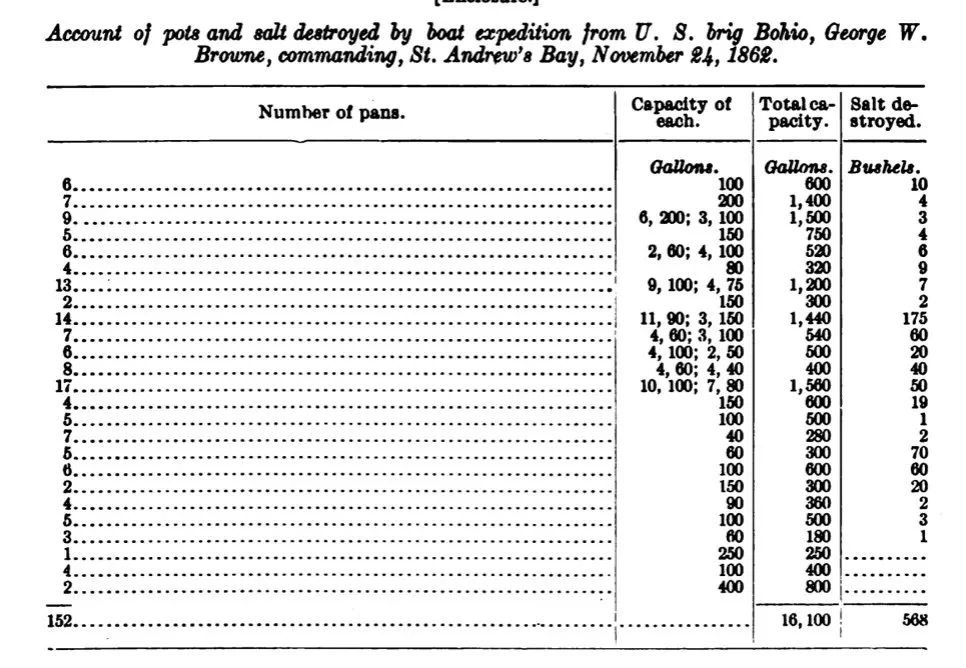
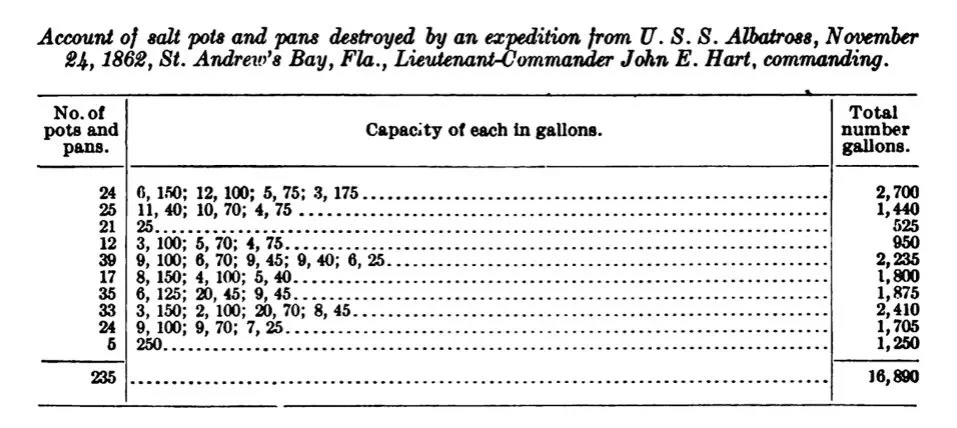
The most devastating destruction came a year later, in December 1863.
In just ten days, a small Union force—four officers and 52 men—methodically wiped out the backbone of salt production on St. Andrews Bay. Their reports list the destruction of:
290 salt works
529 iron kettles
105 iron boilers
268 buildings
33 wagons
12 flatboats
2 sloops
6 ox carts
4,000 bushels of finished salt
Union commanders estimated Confederate forces destroyed nearly the same amount themselves to prevent capture.
During these raids, 48 enslaved people were freed, government salt works were leveled, and private operations were smashed along miles of shoreline. One Union officer estimated the total damage at six million dollars, and judged that three-quarters of all salt facilities on the bay had been eliminated.
The town of St. Andrews did not escape. As Union fire drove out Confederate defenders using the town as a base, all 32 houses burned, leaving little more than ashes behind.
And yet—even that wasn’t the end.
Within months, Confederate authorities rebuilt major salt works on the bay. Union ships returned again and again through 1864 and early 1865, destroying rebuilt kettles, boilers, and buildings as fast as they could be replaced. The last recorded raid shattered remaining kettles on West Bay just weeks before the war ended.
Salt mattered that much.
How Salt Was Made
There was no fancy chemistry. Just labor, heat, and time.
Here’s the basic process:
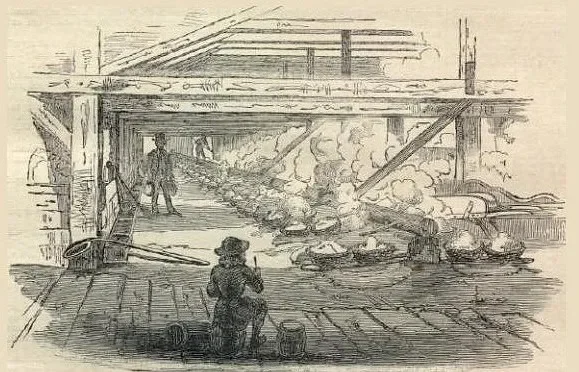
Seawater was collected—hauled in barrels and tubs from the bay.
It was poured into large iron kettles or metal pans.
Fires were built underneath and kept going constantly—meaning huge amounts of firewood were burned.
The water boiled down until crystals formed and thickened.
Workers scraped out the salt, dried it further, and packed it into barrels or sacks.
It was hot, dirty, and relentless. The kind of work that makes you crusty in every sense of the word.
That’s the real root of “salty” here: smoke in your clothes, sweat in your eyes, brine on your skin, and grit under your nails.
Who Worked It
Saltmaking wasn’t done by “the town.” It was done by people—and often, by people with very little choice.
Workers included local fishermen, laborers, and camp crews who followed opportunity. Enslaved labor was also used in Gulf Coast salt operations in that era, especially when planters and operators needed hands to keep kettles running around the clock.
Salt camps could look like temporary villages: rough shelters, stacked firewood, barrels, kettles, and men rotating shifts to keep fires alive.
It wasn’t romantic. It was survival with a payroll.
What Salt Did for St. Andrews
Salt helped St. Andrews do something small towns fight for: be necessary.
Even when St. Andrews was quiet and lightly settled, salt and fishing gave it purpose. During the war, salt gave it importance. After the war, those same waterfront skills—preserving fish, shipping goods, working boats, trading supplies—helped St. Andrews keep breathing when bigger forces elsewhere shifted.
Saltmaking belonged to the same family of bayfront work that later defined the area: fishing, boatbuilding, trade, shipping.
In a real way, salt was one of the earliest “industries” that taught St. Andrews how to be a working waterfront community.
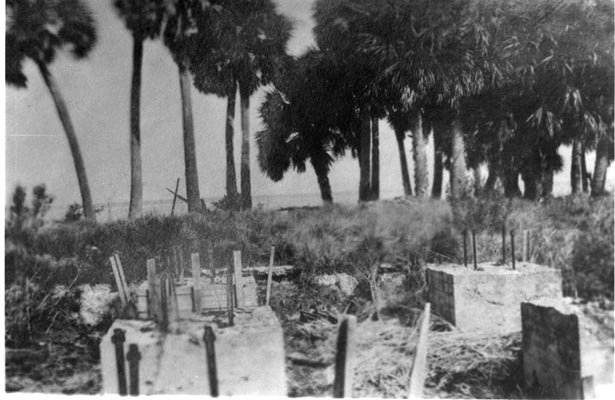
Circa 1900’s photograph taken by G. M. West of the salt works ruins.
Why Salt Making Ended
Like most hard-earned coastal industries, it didn’t end with a bang. It ended with economics.
After the war:
Supply lines reopened.
Cheaper salt returned from traditional sources.
Prices dropped.
And those wood-hungry kettles stopped making financial sense.
Saltmaking was brutally labor-intensive and fuel-intensive. Once salt wasn’t scarce, boiling seawater for hours became a losing deal. So the camps shut down—one by one.
The smoke faded. The kettles rusted. The shoreline returned to quieter work.
St. Andrews stayed a working place—but saltmaking, as an industry, became history.
The Salty Legacy
Today when we say St. Andrews is “salty,” we usually mean:
independent
tough
a little stubborn
proudly local
not polished, not corporate, not pretending
That spirit didn’t appear out of nowhere.
It was forged on the bay—by people who made a living from what the water gave them and what their hands could turn into something useful. Saltmaking is one of the earliest chapters of that story: the original proof that St. Andrews wasn’t built by comfort. It was built by work.
So yes—our “salty” reputation is cultural now.
But it started as something literal.
A bay breeze carrying smoke.
A row of kettles steaming under the stars.
And a community learning, early on, how to survive—and how to matter—on the edge of the Gulf.